RS Technik AG – A clear path with proven technology
This article appeared in: B_I umweltbau – 02.2026
For over three decades, RS Technik AG has stood for high-quality CIPP lining systems and a consistent focus on quality in trenchless sewer rehabilitation. In this interview, President Klaus Müller and future Germany Managing Director Christoph Turk provide insights into the company’s development, technological convictions, sustainability strategies, and the challenges of an industry in transition.

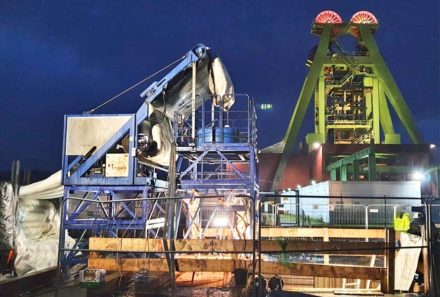
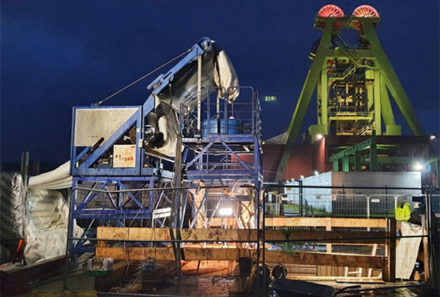
RS Technik AG Germany branch – The former coal mine site at “Kamener Kreuz” now a centre for sustainable pipe rehabilitation.
RS Technik AG has been on the market since 1992 and primarily sells CIPP lining system solutions for pipe and sewer rehabilitation. How has the company developed and changed over the past 33 years?
Klaus Müller: The company was founded in Switzerland in 1992 and renamed RS Technik AG in 1999. We launched the RS CityLiner as our first CIPP lining system in 1994, followed by the RS MaxLiner system in 1996. The company was initially active in the German and Swiss markets and has also established itself in Austria and Italy since 2002. Today, RS Technik has partners and users worldwide.
After 33 years, our proven pipe lining systems are still in use and have demonstrated their performance on the international market. Of course, they have been continuously improved, adapted to new specifications, and the product range has been expanded. However, the fundamental concept of using high-quality epoxy resin systems for long-lasting pipe rehabilitation has remained unchanged.
You primarily use epoxy resin systems and thermosetting processes for CIPP lining, which is considered more of a niche application in the main sewer area. Why have you remained loyal to this concept for the past 33 years?
Klaus Müller: Out of conviction. Epoxy resin systems are the highest quality resins available and cure reliably even under the most adverse environmental conditions. Hot curing allows us to take all local conditions into account and always provide the energy required for complete curing. This enables us to achieve the maximum possible service life for the renovated pipes. We set these standards more than 30 years ago and have never been willing to compromise.
How do you see your company developing over the next five to ten years?
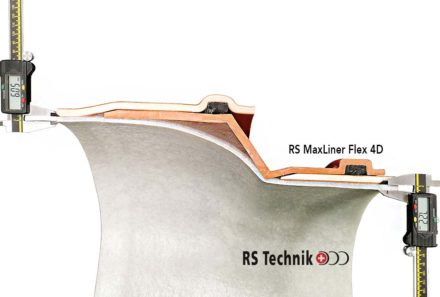
Klaus Müller: RS Technik has a stable position in the market and is particularly impressive thanks to its fast and uncomplicated approach. Our “RS MaxLiner” house connection renovation system has proven itself to be an all-rounder and has gained wide acceptance among installation companies and clients. We expect to secure and expand our market share in this area over the next few years. The advantages of genuine polyaddition-curing epoxy resin systems are particularly evident in the house connection sector, where we have much more complex pipe routes, higher resistance requirements, and more difficult access. Our EP resins allow a watertight and backflow-free connection to the old pipe even without additional connection techniques. This has proven convincing and will continue to be one of the decisive arguments in the future. The carrier materials can be used up to DN400 and allow for multiple dimensional changes while maintaining the required end wall thickness. This means that even main sewers in this dimensional range can be optimally rehabilitated.


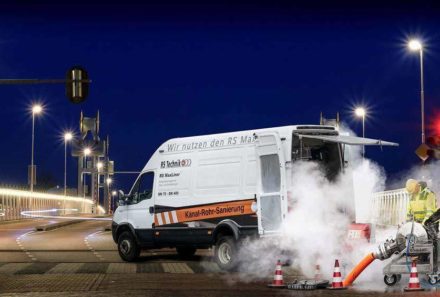
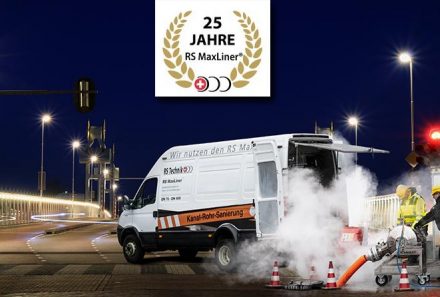
RS MaxLiner® system for challenging pipe routes DN 70 to DN400, including bends and nominal diameter changes, with a wide variety of materials and techniques.
Our RS CityLiner and RS PolyLiner systems have established themselves as hot-curing processes using epoxy resin and polyester or vinyl ester resin up to DN1600. We also expect growth in this area in the coming years, as the need for rehabilitation increases and there is a slight return to hot-curing processes on the market. Particularly in difficult local conditions, such as in groundwater areas, tenders are now once again deliberately risk-reducing and increasingly resorting to conservative and safe hot curing. Ultimately, this approach ensures long service lives.


RS CityLiner® system for the mobile rehabilitation of main pipes and sewers DN 150 to DN 800, on-site impregnation with hot water or steam.

The RS PolyLiner® DN 150 to DN 1700 is available for large sewers and for renovations using UP/VE resin – with a stationary impregnation plant in North Rhine-Westphalia and delivery directly to the construction site.
What are RS Technik’s long-term goals?
Klaus Müller: RS Technik AG will meet future challenges in terms of products and systems. We are constantly developing and optimizing proven technologies. In the future, the proportion of bio-based raw materials will increase and production processes will be CO2-neutral. Only by staying on top of things can we secure our market position.
There will be a rejuvenation of personnel, and long-time branch manager Christoph Turk will also take over the management of RS Technik AG in Germany from July 1, 2026.

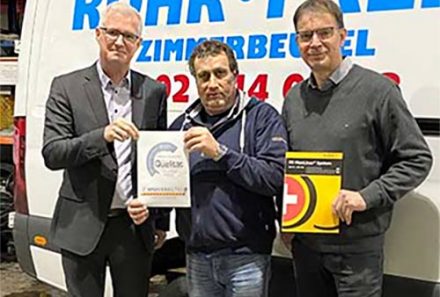
Business owner Klaus Müller (fourth from right) and Christoph Turk (first from right), new managing director for Germany, with the RS Technik AG team.
Christoph Turk: I am looking forward to this challenge and development. I have been working at RS Technik for over 10 years and have come to know and love the industry during this time. My background is in business, and after completing my training in wholesale and foreign trade, I studied business administration in Dortmund. While working at RS Technik, I completed the Certified Sewer Rehabilitation Consultant course, which was very valuable for my professional career and gave me a deeper understanding of the technical diversity of pipe rehabilitation. I am 38 years old, married, and live near Bergkamen. I have known Klaus Müller since childhood and am very grateful to him for his trust. I am proud to represent RS Technik’s impressive rehabilitation systems and to manage the company in Germany.

Photo: Marcel Drawe/Hellweger Anzeiger
Christoph Turk will take over as CEO of RS Technik AG in Germany in July 2026.
What innovative technologies or materials does RST use to improve the efficiency and quality of sewer rehabilitation?
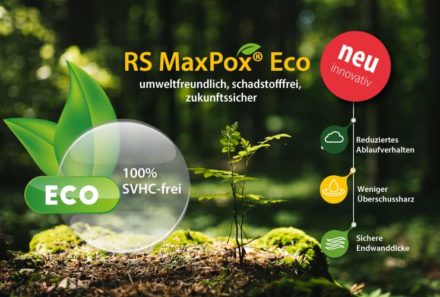
Klaus Müller: In recent years, we have continued to develop both our materials and our technical equipment. With the “WovoLiner,” we now also offer seamless circular-knit carrier hoses with or without glass fiber reinforcement. Our advanced epoxy resin system “MaxPox® Eco” ensures a 100% SVHC-free epoxy resin formulation and thus retains the great advantage of being able to be used in groundwater-free zones without an outer liner or pre-liner. For industrial use in particularly high chemical and thermal stress conditions, we have integrated “MaxPox® Thermo Eco” into the EP resin series.
Christoph Turk: In terms of technical equipment, we are constantly working on our dosing and mixing systems, which are available as fully automatic, processor-controlled high-tech systems or as simple stroke-controlled solutions for small renovation projects. On-site liner impregnation is at the heart of epoxy resin application, and this is precisely where RS Technik AG’s greatest expertise lies. On-site impregnation is flexible and transparent for everyone. The systems enable automatic documentation of the processes and ensure the quality of the end product. In addition, we can obtain online access to system-relevant data in consultation with and with the explicit approval of our customers. In addition to operating temperatures, we can view flow rates, calibration speeds, and any error messages that may be present. Even when we are not on site, we can connect to the systems 24/7, avoid system downtime, or respond immediately in the event of malfunctions.
How does your company keep up to date with the constant stream of new technological developments?
Klaus Müller: In line with our company philosophy, we do not jump on every bandwagon that comes along in our industry. We carefully consider the direction we take in order to remain true to our credo of quality, durability, and sustainability. When new ideas enter the market, we examine them closely before adopting them and recommending them to our customers. To this end, we work with IQS Engineering AG, among others, which designs, conducts, and evaluates comparative installation tests for us.
Christoph Turk: Our epoxy resin systems cure by polyaddition and are therefore particularly safe, free of water ingress, and durable. The current discussions on the market, which repeatedly revolve around residual styrene or insufficient curing of the outer liner layers, do not affect our systems. Epoxy resins are more expensive and therefore rarely win in a direct price comparison. Instead, they impress with technical arguments and thus make a valuable contribution to the hose lining industry.
Environmental protection and sustainability strategies are currently almost a “must” in the trenchless sewer rehabilitation industry. What measures is RST taking to offer environmentally friendly and sustainable solutions?
Christoph Turk: At our RS Technik branch in Bergkamen, we operate entirely on electricity generated by our own solar panels. In addition, we use over 90% recycled fibers in our synthetic fiber liners. In recent years, we have been able to significantly reduce the carbon footprint of all raw material production. We will continue to work on this in the future. In addition, we are gradually switching to bio-based raw materials.
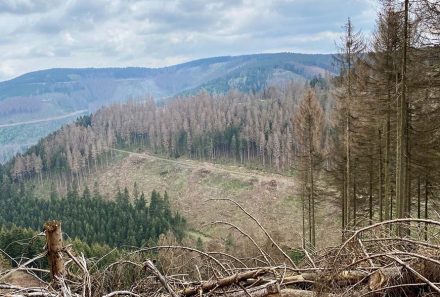
Klaus Müller: Sustainability also means the service life of the products manufactured, and we consider ourselves to be well ahead in this respect with our high-quality EP systems and conservative heat curing. We also measure environmental protection in visible projects. For example, we have reforested an RS Technik forest in the Harz region, which is particularly affected by climate change, in cooperation with the climate action group Klimaaktion Wald.
How does this increasing importance of environmental regulations influence your business strategy?
Klaus Müller: Environmental regulations have a particular impact on product development and the necessary product training. With our new MaxPoxECO epoxy resin series, we have further developed the existing system in line with current chemical legislation and are committed to a 100% SVHC-free formula. In this context, ingredients of particular concern have been substituted. As regulatory classifications are constantly changing, it is important to stay on top of developments in order to keep the system future-proof. This is very time-consuming, but the future-proofing of our products is firmly anchored in our business strategy.
Christoph Turk: Compliance with applicable environmental regulations is also essential for the Bergkamen site. Here, hoses are impregnated with UP or VE resins in a stationary process, and official requirements must be met in order to protect the environment and employees. New chemical laws must be taken into account with regard to the production, storage, and processing of materials.
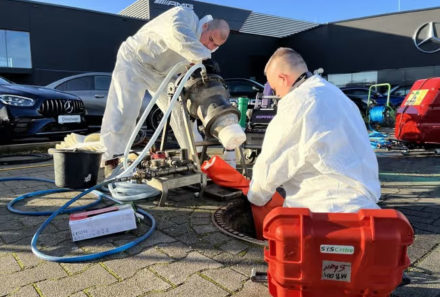
Our mobile impregnation plants for processing EP resins focus on safe and closed processing. This minimizes contact with the materials and protects health and the environment.

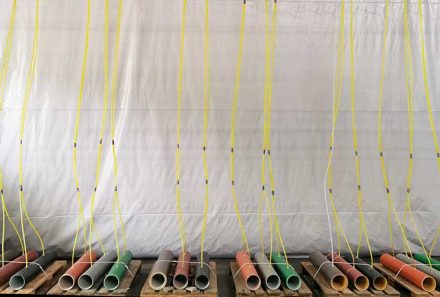
The stationary impregnation of a warm-curing synthetic fiber CIPP liner is a logistical highlight when it comes to large dimensions, wall thicknesses, and lengths. RS Technik AG is impregnating an “RS PolyLiner” in DN1400 with a wall thickness of 27 mm and a length of 203 m with UP resin.
How do you ensure that customers are satisfied with your services and come back?
Christoph Turk: We ensure that we are centrally and permanently available to our customers. We value partnerships and are focused on the long term. The key components are customer proximity, service orientation, consistency, personal contact, and our long-standing intuition for market developments. We also offer additional advice on general business issues faced by our customers. Only when our customers are satisfied and successful can RS Technik AG build on the success of recent decades.
Klaus Müller: As an owner-managed and family-run company, we stand for reliability, personal responsibility, and long-term thinking. Business is done by and between people. Active listening is a key component. Only those who know their customers’ needs and take them seriously will be able to work together successfully. RS Technik technicians provide on-site / hands-on support to customers during critical phases of their projects, including outside normal hours, to ensure quality. In our training courses, we strive not only to teach new legal and regulatory requirements, but also to provide new employees with professional expertise, now also in multiple languages. Furthermore, RS Technik AG has a select, high-quality rental fleet at various locations so that it can supply customers quickly and easily, even during peak periods or in the event of technical failures.
You operate internationally. What are the biggest differences in the industry in Germany compared to other countries?
Klaus Müller: We are proud to have accompanied the establishment of standards and regulatory requirements in many areas in Germany and to have helped shape them through our technical experts. We are involved in association work to review regulations and engage in constructive discussion at the political level. We have transferred these standards to our international activities, which has been very well received and implemented by engineering firms, clients, and large corporations in particular. The willingness of employees abroad to learn is at a high level. Of course, there are market specifics and cultural peculiarities in individual countries that are not comparable. However, we always work with our own staff who either know the regional specifics or have quickly familiarized themselves with them. Local businesses must also be run locally.
Christoph Turk: In Germany, we would like to see a significant reduction in bureaucracy so that tenders can be processed more quickly. Earlier project delivery would make it easier to address the growing challenge of maintaining underground and indoor infrastructure. Too often, visual inspections show that damage has already progressed so far that pipe rehabilitation is no longer viable. Earlier intervention could have prevented many of these issues and the associated costs..
What current challenges do you see in the industry, and how does your company plan to overcome them?
Klaus Müller: The biggest challenge remains the enormous need to renovate underground infrastructure. Our industry is one of the key players in maintaining and securing drainage systems. To meet demand, we need sustainable system solutions, sufficient raw material availability, and well-trained specialists. In the future, we will have to rely more on automation to adequately cover the wide range of tasks and also to counteract the growing shortage of skilled workers.
The CIPP lining industry is stable and offers unparalleled diversity, making it possible to use the most suitable solutions for every project. Taking into account the core issues of service life and sustainability, this approach will become increasingly prevalent in the future. In recent years, there has been much discussion about minimum wall thickness, residual styrene content, and curing deficits. This has created a degree of uncertainty within the industry that now needs to be addressed in a clear and objective way. Pipe lining remains a proven and effective rehabilitation solution. This group of technologies is essential for meeting the growing demand for infrastructure rehabilitation, but it is technically demanding. The industry should therefore be transparent about both strengths and limitations, particularly in applications where service life is critical.
Christoph Turk: RS Technik stands behind quality, durability, and sustainability and will face future challenges head-on. We have remained true to our goals and communicate our strengths and weaknesses. Our users appreciate our advice and support, as well as our willingness to develop further with them. With constantly changing local conditions, users need systems that are sufficiently robust to comply with installation specifications. We keep a constant eye on the expectations and specifications of network operators and will continue to implement them in the future.
What challenges have you faced in recent years, and how do you assess the challenges in the near future?
Christoph Turk: In recent years, one of the biggest challenges has been maintaining our stationary impregnation plant in Bergkamen. Our “RS PolyLiner” system, based on UP/VE resins, relies on hot water curing, which has not been widely advertised in the past. UV curing has become more widespread and is now used virtually everywhere, replacing traditional hot curing methods in many areas. The current shift back to hot curing methods in difficult construction site conditions, for example to counteract strong cooling effects, is important for maintaining technological diversity and ensuring the maximum possible service life of the renovated pipelines.
Klaus Müller: In the future, the shortage of skilled workers will be one of our biggest challenges in the industry. The underground infrastructure is invisible to many people, and we need to spark interest and enthusiasm in order to attract people to our industry. Increasing automation will help to simplify complex tasks and complete them ever more quickly. Another major challenge is global competition. We have developed high quality standards in Germany, Austria, and Switzerland. It is important to maintain these standards and not lose sight of them in a global context just because something else is cheaper. The core objective of maximizing service life is the basis for sustainable action. Unfortunately, this is often neglected in pure price comparisons.
Can you describe a particularly challenging project that RST has successfully implemented?
Klaus Müller: Last year, we supported two companies that were new to the market and have considerable market potential both domestically and abroad. We built trust in our renovation systems through training courses at our premises in Bergkamen and at the customer’s site. This enabled us to take the first steps together with people who had no experience in the industry. We are not an executing company, but when our customers ask us for help, we are there to assist wherever we can.
Christoph Turk: In addition to the small trade fairs, the organization of the “Bergkamener Linertag” (Bergkamen Liner Day) by RS Technik AG is certainly a major event for everyone involved. This day is held regularly and is one of our highlights. The next event will take place on September 10, 2026. We are committed to this event as a way to discuss innovations, thank our customers, welcome new prospects to our world, and certainly also promote industry exchange in a relaxed setting. We love the interaction between our customers, local authorities, engineering firms, planners, partners, employees, and politicians. It is a relaxed and peaceful platform for networking, offering the opportunity to escape the pressure of competition for a few hours and simply enjoy yourself. More information will be available on our website from the first quarter onwards.

What do you think makes your company successful?
Klaus Müller: RS Technik AG has followed a consistent and disciplined path over the past decades. The team has been guided by a clear vision, with a strong focus on epoxy resin-based materials and the continuous development of needled-felt CIPP systems. We have always aimed to maintain stable pricing and have deliberately avoided price dumping, as this does not align with our philosophy. We rely on the people who have contributed to the success of the company, sometimes for decades – we would like to express our sincere thanks to everyone who has contributed and continues to contribute. We are aware of our social responsibility, and those who really know us are aware of the advantages of our owner-managed business. We drive forward, we listen to our customers, we take their concerns, ideas, visions, and suggestions for improvement seriously, and we always strive to improve ourselves. Our success is based on people and good, productive cooperation—both internally and with our customers and partners. We are service providers—we serve and we deliver.
Related posts